
A washing machine that bangs, shakes, or walks across the laundry room can turn a normal load into a noisy and potentially damaging problem. Sometimes the cause is a load that shifted to one side. Other times, repeated vibration points to installation, suspension, bearing, drive, drainage, or structural issues that deserve professional testing.
Homeowners in Mesquite and Heath should not keep restarting an aggressively shaking washer and hope it settles down. Repeated impacts can strain hoses, wiring, the tub, the cabinet, and nearby flooring. The safest approach is to stop the cycle, protect the area, and identify whether the symptom is a simple loading problem or a mechanical failure.
Need help with a washer that shakes or moves? Urban Brothers Appliance Repair provides washer repair in Mesquite TX, Heath, and selected nearby communities. Call or text 469-720-3885 with the washer brand, model number if available, service address, and a description of when the vibration begins. $150 House Call — Applied Toward Your Final Repair Bill.
First: Know When to Stop the Washer
A small amount of movement during spin can be normal, especially when wet items redistribute inside the basket. Violent banging, repeated cabinet impacts, walking several inches, scraping, a burning smell, smoke, leaking water, or a power problem is not normal. Press pause or cancel if the controls respond. If the machine appears unsafe, disconnect power only when you can reach the plug without stepping in water or touching a damaged cord.
Do not hold the washer in place with your body, stand on it, reach into a moving basket, or remove panels while it is connected to power. If a supply hose has pulled loose or water is escaping, shut off the washer’s water valves when it is safe to do so. Take a short video from a safe distance because intermittent sounds and movement can be useful during diagnosis. For urgent guidance about whether to keep using the appliance, call 469-720-3885.
Why a Washer Shakes Violently During the Spin Cycle
The spin cycle removes water by rotating the load at high speed. Even a small imbalance creates much more force at full spin than it does during washing or rinsing. The washer’s leveling system, suspension, basket, bearings, drive components, controls, and floor all work together to manage that force. A problem in any one of those areas can create similar symptoms, so the timing and pattern of the shaking matter.
An Unbalanced or Difficult Load
A single blanket, bath mat, comforter, pillow, or bundle of heavy towels may collect on one side of the basket. A very small load can also be difficult to balance because there are not enough items to distribute evenly. Pause the washer, wait for the basket to stop completely, and rearrange the items. If the fabric is saturated and unusually heavy, follow the care label and washer manual before restarting.
The Washer Is Not Level or a Foot Is Loose
A washer should sit firmly on all four feet without rocking. An uneven floor, a loose leveling foot, a missing locking nut, or a machine that was shifted during cleaning can allow the cabinet to move. With the washer off and empty, press gently on opposite top corners. If the cabinet rocks, consult the owner’s manual for the correct leveling procedure.
Leveling must address both side-to-side and front-to-back position, and the feet need to remain locked after adjustment. Placing loose wood, cardboard, towels, or improvised wedges under the machine can create a new instability or moisture problem. If the floor flexes noticeably under normal foot traffic, the surface itself may also contribute to vibration.
Shipping Bolts Were Left in a Front-Load Washer
Many front-load washers use shipping bolts or transport hardware to secure the tub during delivery. Those parts must be removed according to the installation instructions before normal operation. If a recently installed or recently moved front-loader has shaken severely from its first cycle, stop using it and check the installation documentation. Running it with transport hardware installed can transmit strong vibration through the cabinet.
Do not guess which fasteners are shipping bolts or remove structural hardware based on a general online video. The location and procedure vary by model. Keep removed transport parts in case the appliance must be moved again.
Worn Suspension Rods, Shocks, Springs, or Dampers
Top-load washers commonly use suspension rods, springs, or dampening components to keep the tub centered. Front-load models often use shock absorbers, springs, and counterweights. When those parts wear, loosen, break, or detach, the tub may bounce excessively and strike the cabinet. The washer may behave normally while filling and washing but become violent as spin speed increases.
A basket that remains tilted, drops too easily, rebounds several times when pressed, or produces a new knocking sound may point toward the suspension system. These observations are clues, not a complete diagnosis. Correct repair requires checking all related supports, mounts, and surrounding components rather than replacing one visible part automatically.
A Bearing, Basket, Spider, or Tub Component Is Damaged
A deep roaring sound, grinding, metal-on-metal noise, looseness at the basket, or repeated off-center rotation may involve the bearing or another basket-support component. Some front-load machines use a basket support sometimes called a spider. Corrosion or cracking can let the inner basket move incorrectly. Other models may develop tub, shaft, hub, or mounting failures.
The Washer Is Not Draining Before Spin
A washer trying to spin with too much water and a heavy saturated load may struggle, stop, display an error, or repeatedly attempt to rebalance. Possible causes include a blocked homeowner-accessible filter, drain-hose problem, pump obstruction, failed pump, wiring fault, pressure-sensing problem, or household drain restriction.
Look for standing water, unusually wet clothing, a humming sound, or a drain-related code. Clean only the filter the manufacturer identifies as customer-accessible, and use caution because retained water may escape when it opens. Never reach into a hidden pump area. If water remains or returns, call 469-720-3885 instead of forcing another spin cycle.
A Motor, Drive, Sensor, or Control Problem Is Interrupting Spin
Washers may use belts, pulleys, couplers, clutches, direct-drive systems, rotor and stator assemblies, speed sensors, lid locks, door locks, and electronic controls. A failing component can create jerking, repeated start-and-stop behavior, uneven acceleration, or a cycle that never reaches full speed.
An error code can help identify the system that detected a problem, but it does not always identify the failed part. Record the complete code before unplugging the washer. Repeatedly clearing a code without finding its cause can erase useful information while leaving the underlying fault unchanged.
How Top-Load and Front-Load Vibration Problems Differ
Top-load washers often show suspension or balance problems as a basket that leans, bounces, or strikes the cabinet. Traditional agitator models and high-efficiency impeller models distribute clothing differently, so the correct loading method matters. A loose hub, worn drive component, suspension failure, or damaged basket can produce symptoms that look like a simple unbalanced load.
Front-load washers suspend the drum horizontally and depend on shocks, springs, counterweights, bearings, and a secure installation. They can vibrate strongly when shipping hardware remains installed, when a counterweight or shock is damaged, or when the basket support or bearing develops play. Stacked units require extra care because access, fastening, and movement affect both appliances.
Model-specific construction determines the right tests. Share the full model number when you call 469-720-3885 so the service request can be documented accurately.
Seven Safe Checks You Can Make Before Scheduling Service
- Stop and redistribute the load. Wait until all movement ends, then separate tangled items and spread the load evenly.
- Try a normal mixed load. If appropriate for the machine, compare performance with ordinary clothing rather than one bulky item.
- Check for cabinet rocking. With the washer off and empty, press gently on opposite corners to see whether all four feet contact the floor.
- Inspect visible hoses and clearances. Confirm the drain and fill hoses are not being pulled, crushed, or struck by the moving cabinet.
- Look for retained water. Clothes that are still dripping or visible standing water may indicate a drainage problem.
- Record the exact symptom. Note the cycle stage, load type, spin setting, code, sound, leak, and how far the washer moved.
- Review the owner’s manual. Follow the model-specific loading, leveling, filter, and installation instructions.
If those checks do not explain the problem, or the washer immediately returns to severe shaking, stop testing it with more loads. Homeowners looking for appliance repair Mesquite TX or appliance repair Heath TX can call 469-720-3885 to confirm service at the complete address.
What Not to Do With a Shaking Washer
- Do not climb on, sit on, or physically restrain the washer during operation.
- Do not bypass a lid lock, door lock, vibration sensor, or other safety device.
- Do not remove access panels while the appliance is connected to electricity.
- Do not keep running high-speed spin cycles to “see if it fixes itself.”
- Do not install generic suspension or bearing parts without confirming the exact model and failure.
- Do not ignore stretched hoses, damaged cords, water leaks, burning odors, or metal debris.
A washer combines water, household voltage, heavy moving parts, sharp cabinet edges, and a tub that can retain significant weight. Safe diagnosis may require controlled testing with panels removed and measurements taken under specific conditions. That work belongs with a qualified technician.
What a Professional Washer Diagnosis Should Evaluate
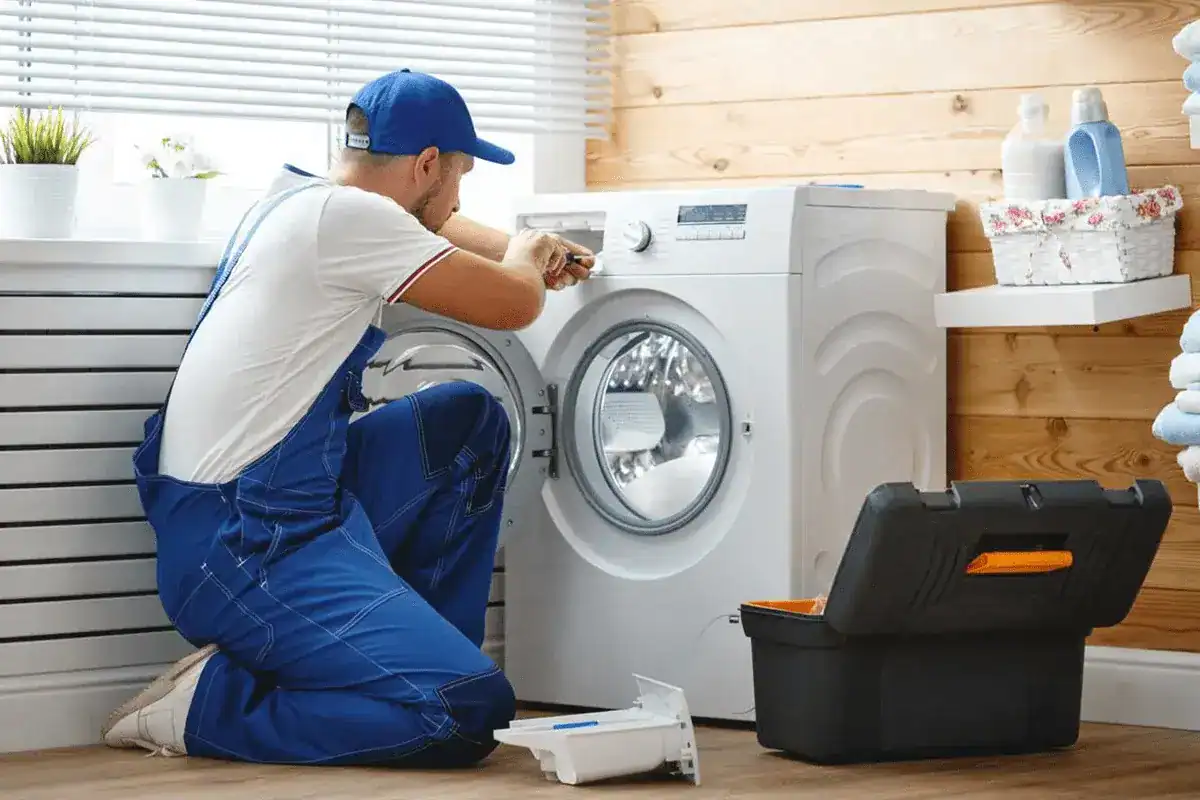
A useful diagnosis starts by confirming the complaint and reviewing when it occurs. Depending on the model, the technician may inspect leveling, the floor contact points, installation hardware, hoses, tub position, suspension rods, shocks, springs, counterweights, basket play, bearings, hubs, drive components, pump operation, sensors, locks, wiring, and stored error information.
The goal is to identify the failed condition before recommending parts. New suspension rods will not correct a flexible floor, retained shipping bolts, a damaged basket support, or a drainage failure. Likewise, replacing a control will not repair a loose connection or worn mechanical component. A local appliance repair company should explain the finding and recommended repair before work proceeds.
Urban Brothers provides mobile, in-home service in Mesquite ZIP codes 75149, 75150, and 75181, Heath 75032, and selected nearby communities. Route and appointment availability vary. Same-day appliance repair may be available depending on the schedule, location, diagnosis, and required parts, but it is not guaranteed. Call or text 469-720-3885 to confirm the current service window.
Should You Repair or Replace a Washer That Shakes?
The symptom alone does not answer that question. A machine that needs leveling has a very different outlook from one with extensive tub, bearing, basket-support, or structural damage. Consider the diagnosed failure, washer age, overall condition, prior repairs, corrosion, parts availability, repair access, installation, and replacement cost.
A repair may make sense when the rest of the washer is in good condition and the problem is isolated and repairable. Replacement may be the more practical choice when multiple major systems are deteriorated, parts are unavailable, the cabinet or tub structure is damaged, or the repair does not fit the appliance’s remaining value. Urban Brothers does not provide a repair estimate without proper diagnosis because several failures can produce the same shaking symptom.
The current service policy is $150 House Call — Applied Toward Your Final Repair Bill. Qualifying repairs completed with company-supplied parts include a 90-day parts-and-labor warranty covering the specific supplied component and associated workmanship, subject to the written warranty terms.
How to Reduce Future Washer Vibration
- Follow the manufacturer’s loading guidance and avoid packing items tightly into the basket.
- Wash bulky items only when the washer is designed to handle them.
- Keep the washer level and recheck the feet after moving or cleaning around it.
- Use the recommended detergent type and amount, especially in high-efficiency machines.
- Remove objects from pockets that could become trapped around the basket or pump.
- Address slow draining, unusual noises, leaks, and repeated balance errors early.
- Keep hoses positioned so normal cabinet movement does not pull or crush them.
- Retain shipping hardware for future moves and reinstall it only as the manual directs.
Preventive habits cannot stop every component failure, but they reduce avoidable stress and make changing symptoms easier to recognize. For more homeowner guidance, review Urban Brothers’ appliance maintenance articles.
Washer Vibration FAQ for Mesquite and Heath Homeowners
Why does my washer shake only with towels or blankets?
Heavy absorbent items can collect on one side and become much heavier after soaking. Redistribute the load and follow the washer manual’s bulky-item guidance. If ordinary loads also cause severe movement, the machine may have a leveling, suspension, drainage, basket, or drive problem.
Can I keep using the washer if it still completes the cycle?
Not if the movement is violent, the cabinet walks, hoses stretch, water leaks, or the machine makes grinding or impact noises. Continued operation can worsen damage. Stop using it and call 469-720-3885 for service guidance.
Does a shaking washer always need new suspension parts?
No. Loading, leveling, floor stability, shipping hardware, drainage, basket supports, bearings, drive parts, sensors, and controls may all affect spin behavior. Testing should identify the cause before parts are ordered.
Why did my new front-load washer shake on its first cycle?
Installation should be checked first, including the model’s shipping hardware, leveling, pedestal or stacking connections, and floor contact. Stop the appliance and follow the installation instructions rather than continuing repeated test cycles.
Do you service washers in both Mesquite and Heath?
Yes. Mesquite and Heath are listed service markets. Availability depends on the route and schedule, so provide the complete address and ZIP code when requesting service.
What information should I provide when I call?
Have your name, phone number, complete service address, washer brand, model number if available, load type, cycle stage, error code, and a safe video of the movement or sound. These details help document the complaint, but the appliance still needs diagnosis before a repair recommendation or estimate.
Schedule Washer Repair in Mesquite or Heath, TX
A washer that repeatedly bangs, walks, leaks, or loses balance needs more than another rearranged load. Urban Brothers Appliance Repair diagnoses washer installation, suspension, drainage, drive, bearing, basket, sensor, lock, wiring, and control problems for homeowners in Mesquite, Heath, and selected nearby service communities.
Schedule appliance repair with Urban Brothers Appliance Repair. The house call is $150 and is applied toward your final repair bill. Call or text 469-720-3885, or use the approved page to schedule your service appointment.