
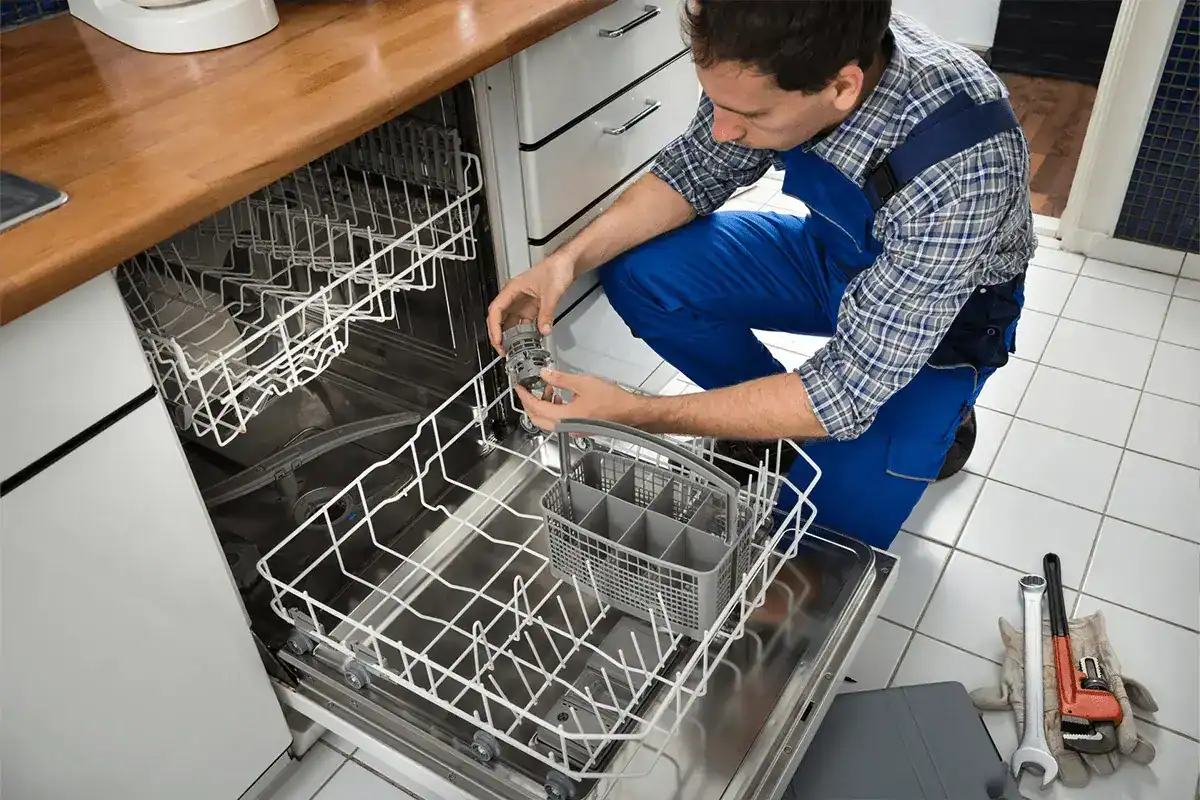
A dishwasher can finish a complete cycle and still leave glasses, plates, and plastic containers covered with water. That does not always mean the entire appliance has failed. Drying performance depends on the selected cycle, rinse aid, water temperature, loading, drainage, airflow, sensors, controls, and the heating system. When one part of that process is missing, the dishes may look clean but remain wet long after the cycle ends.
For homeowners in Mesquite and Heath, the first step is separating a maintenance issue from an electrical or mechanical failure. This guide explains safe checks and when professional diagnosis makes sense.
Need help now? Urban Brothers Appliance Repair provides dishwasher repair in Mesquite TX, Heath, and nearby communities. Call or text 469-720-3885 with the dishwasher brand, model number if available, service address, and a short description of what happens at the end of the cycle. $150 House Call — Applied Toward Your Final Repair Bill.
Is the Dishwasher Failing to Dry or Failing to Clean?
Start by looking at the whole result, not only the water droplets. If dishes are clean and hot but plastics remain wet, the dishwasher may be operating normally for the chosen settings. Plastic does not retain heat as long as glass, ceramic, or metal, so water evaporates from it more slowly. An energy-saving cycle may also use less heat or shorten the heated portion of the cycle.
If every item is cold and soaked, the tub never becomes warm, detergent remains in the dispenser, or food residue is still present, the problem may extend beyond normal condensation. A wash-temperature issue, interrupted cycle, drainage problem, failed heater, vent restriction, fan failure, sensor error, or control fault may be involved. Those problems can look similar from the outside, which is why replacing a heating element based only on wet dishes is a gamble.
Also note when the problem began. A sudden change after months of good performance points in a different direction than a dishwasher that has always dried poorly. Changes in detergent, rinse aid, cycle selection, loading pattern, plumbing work, or garbage-disposal installation can matter. Share those details when you call 469-720-3885; they help narrow the diagnostic path without pretending to diagnose the appliance by phone.
Common Reasons a Dishwasher Leaves Dishes Wet
1. Heated Dry Is Turned Off
Many modern dishwashers default to an energy-saving setting. Depending on the model, the control panel may label the option Heated Dry, Extra Dry, High Temp, Sanitize, ProDry, or another manufacturer-specific name. Some cycles intentionally reduce heat and rely mostly on condensation drying. Check the owner’s manual and confirm that the intended drying option is selected before assuming a component is defective.
If the control will not accept the drying selection, the option light turns off by itself, or the cycle ends unusually early, record that behavior. It may indicate a control, latch, sensor, or cycle-sequence issue rather than a simple setting.
2. The Rinse-Aid Dispenser Is Empty or Not Releasing
Rinse aid lowers the surface tension of water so it sheets off dishes instead of collecting in heavy droplets. A low reservoir can leave glassware spotted and plastics especially wet. Refill only with a product approved for automatic dishwashers, wipe away spills, and use the dispenser adjustment recommended by the manufacturer.
If the reservoir stays full for weeks, leaks into the tub, or the cap is damaged, the dispenser may not be operating correctly. Excess detergent or ordinary hand-dishwashing liquid can also create suds that interfere with washing, drainage, and drying. Never add products that are not intended for an automatic dishwasher.
3. Incoming Water Is Not Hot Enough
The appliance needs appropriately heated water to dissolve detergent, clean dishes, and support the final drying process. If hot water takes a long time to reach the kitchen sink, the dishwasher may initially fill with cooler water. Running the kitchen faucet until the water becomes hot before starting the dishwasher can help on some installations. Follow the dishwasher and water-heater manufacturer instructions rather than raising household water temperature blindly, because excessively hot water creates a scalding risk.
If the dishwasher never heats even though the home has hot water, the cause may be inside the appliance. A heater, temperature sensor, wiring connection, control, or cycle condition may prevent the expected temperature rise. Call 469-720-3885 if the tub consistently stays cold or the machine displays a heating-related error.

4. The Heating Element or Heat System Has Failed
Some dishwashers use an exposed heating element near the bottom of the tub. Others use a concealed heater, heat pump, fan-assisted system, or condensation-drying design. The correct test depends on the exact model. A visibly damaged exposed element is meaningful, but an element that looks normal can still have an electrical failure. Likewise, a wet load does not prove that the element itself is bad.
Diagnosis may require checking resistance, voltage, wiring, thermal protection, sensors, and control output while following safe service procedures. Dishwashers combine household voltage, water, sharp metal edges, and tight access. Homeowners should not remove panels or probe live circuits. Disconnecting and reconnecting parts without testing can create leaks or damage the control system.
5. A Thermostat, Thermistor, or Sensor Is Reporting Incorrectly
The control relies on temperature and cycle feedback to decide when to energize heat, advance the program, or end the cycle. A sensor that reads incorrectly may prevent proper heating even when the heater is capable of working. Some models store an error code; others simply leave dishes wet or take much longer than usual.
Write down the exact code before resetting power. A reset can clear a temporary control state, but repeated resetting is not a repair. If the same symptom returns, the dishwasher needs testing under the conditions that produce the failure.
6. The Vent, Fan, or Door Mechanism Is Not Working
Some models release moist air through a vent, use a small drying fan, or automatically crack the door near the end of the cycle. A blocked vent, stalled fan, failed wax motor, wiring issue, or door mechanism problem can trap steam inside the tub. The result may be unusually heavy condensation on the door and upper rack.
Do not force an automatic door-open mechanism. Make sure dishes and utensils are not physically blocking the vent or preventing the door from closing correctly. If you hear a new grinding or buzzing sound during the drying stage, include that detail when requesting service.
7. The Dishwasher Is Not Draining Completely
Drying problems sometimes begin with water that never leaves the tub. A dirty accessible filter, kinked drain hose, obstructed connection, failed drain pump, improper installation, or household plumbing restriction can leave standing water and excess humidity. Wet dishes may be only one symptom; odors, residue, or water near the filter may appear too.
Clean only the homeowner-accessible filter according to the manual and inspect the visible area for food debris or broken glass. Use gloves and do not reach into hidden pump areas. If standing water returns, call 469-720-3885. A technician can determine whether the restriction is in the dishwasher, its drain path, or a related installation condition.
8. Loading Prevents Water From Draining Off
Deep bowls, cup bottoms, storage-container rims, and concave utensils can hold water even when the dishwasher dries correctly. Angle items so water can run off, keep spray-arm paths clear, and avoid nesting dishes together. Do not place tall items where they block the detergent door, vent, or rotating spray arm.
Overloading reduces circulation, while very light loads may not retain enough heat for strong condensation drying. A balanced load and the rack arrangement shown in the owner’s manual usually give the best result. If performance remains poor across different loads and settings, a component or installation problem becomes more likely.
Seven Safe Checks Before Scheduling Dishwasher Repair
- Confirm the cycle and options. Select the normal or manufacturer-recommended cycle with the appropriate drying option instead of relying on a quick or energy-saving cycle for comparison.
- Refill rinse aid. Make sure the dispenser is filled, the cap closes correctly, and the setting matches the manual.
- Improve loading. Angle cups and bowls, separate plastics, and confirm nothing blocks the spray arms, vent, or detergent dispenser.
- Check the accessible filter. Remove and clean it only as the manufacturer directs. Look carefully for labels, glass, or food debris.
- Check for standing water. A small amount in a sump area may be normal, but water covering the tub floor after the cycle is not.
- Note temperature and timing. Without touching exposed components, observe whether dishes feel warm shortly after completion and whether the cycle ends at the expected time.
- Record evidence. Photograph any error code, standing water, residue, leak location, or unusual display behavior before resetting the machine.
These checks may correct a setting or maintenance issue, but they do not replace diagnosis. If the dishwasher leaks, smells like burning, trips a breaker, produces smoke, or shows damaged wiring, stop using it. For professional appliance repair in Mesquite TX or appliance repair in Heath TX, call 469-720-3885.
What a Professional Dishwasher Diagnosis Should Evaluate
A useful diagnosis starts with the customer’s complaint and then verifies the full cycle. Depending on the model and symptom, the technician may inspect the installation, water supply, drain path, filter, spray system, dispenser, heating circuit, thermal protection, sensors, fan or vent system, door latch, wiring, and electronic controls. Stored error information and service-mode tests may also help.
The point is to identify the failed condition before recommending a part. For example, replacing a heater will not solve a control that never sends power to it. Replacing a control will not solve a broken wire, failed sensor, poor connection, or drainage problem. A local appliance repair company should explain what was found, what repair is recommended, and what the customer can expect before work proceeds.
Urban Brothers Appliance Repair provides mobile, in-home service in Mesquite ZIP codes 75149, 75150, and 75181, as well as Heath 75032 and selected nearby communities. Homeowners searching for appliance repair near me can call or text 469-720-3885 to confirm service at the exact address. Same-day appliance repair may be available depending on the route, schedule, diagnosis, and required parts, but it is not guaranteed.
Dishwasher Repair or Replacement: How to Decide
Age matters, but it is not the only factor. The diagnosed failure, overall condition, parts availability, repair access, installation quality, prior repair history, rack condition, tub condition, and replacement cost all belong in the decision. A well-maintained dishwasher with an isolated, repairable failure may have useful life remaining. Replacement may make more sense when several major systems are deteriorated, the tub is damaged, parts are unavailable, or the repair does not fit the appliance’s remaining value.
Do not make the decision from a symptom alone. “Dishes are wet” could describe an empty rinse-aid dispenser, a blocked vent, an interrupted cycle, or a failed heating circuit. Those outcomes carry very different repair implications. An accurate diagnosis gives you something concrete to compare with the cost and inconvenience of replacement.
Urban Brothers does not provide a repair quote without proper diagnosis. The service policy is $150 House Call — Applied Toward Your Final Repair Bill. Call 469-720-3885 to request current scheduling information for Mesquite, Heath, Forney, Heartland, Sunnyvale, Garland, Rowlett, Rockwall, Balch Springs, East Dallas, Lakewood, White Rock, or another listed service community.
How to Improve Dishwasher Drying and Reduce Future Problems
- Use detergent and rinse aid made for automatic dishwashers, following product and appliance instructions.
- Clean the accessible filter regularly instead of waiting for odors or standing water.
- Keep spray-arm openings clear and confirm the arms rotate freely before starting a load.
- Angle cups, bowls, and plastic containers so they do not collect water.
- Use the cycle and drying option appropriate for the load rather than using quick wash for every load.
- Address leaks, unusual noises, error codes, and repeated cycle interruptions early.
- After plumbing or disposal work, confirm the dishwasher drain connection was restored correctly.
- Do not use excessive detergent; too many suds can interfere with washing and draining.
Maintenance cannot prevent every electrical or mechanical failure, but it can reduce avoidable performance problems and produce better diagnostic information when service is needed. For more homeowner guidance, review the company’s appliance maintenance articles.
Dishwasher Drying FAQ for Mesquite and Heath Homeowners
Why are only the plastic dishes wet?
Plastic cools faster and stores less heat than glass, ceramic, or metal. Water therefore evaporates more slowly from plastic surfaces. Use rinse aid, select the appropriate drying option, and angle plastic items so water can drain. If all items remain cold and soaked, another problem may be present.
Should I open the dishwasher door after the cycle?
Some manufacturers recommend opening the door slightly after the cycle, while certain models do it automatically. Follow the instructions for your model. Be careful of hot steam, and do not force a powered door-opening mechanism.
Does wet dishware always mean the heating element is bad?
No. Rinse aid, cycle selection, loading, water temperature, drainage, a sensor, wiring, ventilation, a fan, or the control system may be responsible. Testing is needed before replacing a heater.
Why does the dishwasher smell after leaving dishes wet?
Standing water, trapped food in an accessible filter, poor drainage, or residue can produce odors. Clean the filter according to the manual and inspect for standing water. If water remains or returns, request service instead of repeatedly running the machine.
Can Urban Brothers service dishwashers in both Mesquite and Heath?
Yes. Mesquite and Heath are listed service markets. Availability varies with the route and schedule, so provide the complete service address when calling 469-720-3885.
What information should I have ready?
Provide your name, phone number, complete service address, dishwasher brand, model number if available, problem description, requested service date, and photos of any code, leak, standing water, or damaged area. An adult must be present unless the applicable prepayment arrangement has been made.
What repair warranty does Urban Brothers provide?
Qualifying repairs completed with company-supplied parts include a 90-day parts-and-labor warranty covering the specific supplied component and associated workmanship, subject to the written warranty terms. Unrelated component failures and outside electrical, plumbing, gas, or ventilation problems are not covered by the original repair.
Schedule Dishwasher Repair in Mesquite or Heath, TX
When dishes stay wet after you have checked the settings, rinse aid, loading, filter, and visible drainage conditions, the next step is testing the appliance rather than guessing at parts. Urban Brothers Appliance Repair diagnoses dishwasher heating, draining, washing, control, sensor, latch, vent, and fan problems for homeowners in Mesquite, Heath, and nearby service communities.
Schedule appliance repair with Urban Brothers Appliance Repair. The house call is $150 and is applied toward your final repair bill. Call or text 469-720-3885, or use the approved page to schedule your service appointment.